Alarm blares at 7 AM. You hit the pillow right at 11 PM last night, clocked a solid 8 hours, and theoretically should be at 100% battery.
But once you're at your desk, you're reading the same line of code three times and it's not sinking in. In meetings, everything sounds like it's coming through a frosted glass window. This isn't a willpower issue; you just woke up at the wrong phase.
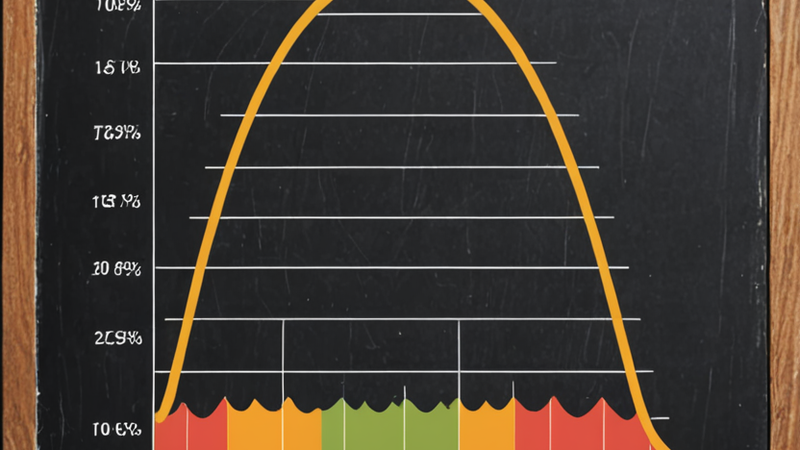
Sleep Cycle: The batch job your brain runs every night. Each iteration takes ~90 minutes, descending from light sleep to deep sleep, rebounding to REM, then looping to the next iteration.
Deep Sleep: The system maintenance window. Growth hormone secretion and immune system cleanup happen here, heavily concentrated in the first half of the night.
REM: The thread for memory archival and emotional garbage collection. Its proportion increases as the night progresses; this is where dreaming happens.
Once you grasp this architecture, it's obvious: pulling an all-nighter until 2–3 AM and then crashing cuts your deep sleep quota in half. No amount of daytime napping will patch this hard bug.
Why feel drained after a full 8 hours? You probably ran 5 complete cycles plus a half-cycle. That half-cycle got stuck in deep sleep, and when the alarm goes off, it's like sending a kill -9 to a running process.
The process is terminated, but memory isn't fully freed. You're awake, but your brain is still hanging in the background.
Sleep Inertia: The lingering cognitive lag after a forced wake-up. It typically lasts 15 minutes to 1 hour, peaking when interrupted during deep sleep.
Ever felt this? The alarm blares, and you feel like you're being yanked out of a deep well. For the next half hour, you can't even be bothered to lift a finger.
Classic symptom of a deep sleep interrupt. Conversely, waking during light sleep or at a cycle boundary feels almost natural. You open your eyes and are back online in minutes.
Same 8 hours, different wake-up timing, and the UX is worlds apart.
Stop gambling. Instead of relying on daily RNG, proactively set your alarm to hit the boundary between two cycles.
In plain English, it's a 3-step process:
1. Lock your wake-up time. Say 7:00 AM. Non-negotiable on weekdays.
2. Count backward in 90-minute blocks: 7:00 → 5:30 → 4:00 → 2:30 → 1:00 → 23:30 → 22:00. This sequence gives you your theoretical bedtimes.
3. Subtract a 15-minute sleep buffer. Humans aren't light switches; it takes 10–20 minutes on average to transition from lying down to sleep.
Running the math: to wake at 7:00, your ideal bedtimes are 23:15 (5 cycles) or 21:45 (6 cycles). Most people pick the former. You're only getting 7.5 hours, but waking at a cycle boundary feels infinitely better than getting deep sleep cut short after 8 hours.
Sleeping less but feeling more alert? Absolutely. That's the leverage of cycle alignment.
I got burned by this for months, obsessing over "when to sleep." Then it clicked: you should lock "when to wake up" first. Fix the wake time, and the bedtime solves itself.
Test each new bedtime for 3–5 days. Daytime performance is the only reliable acceptance criterion. Too lazy to calculate manually? Use the Sleep Cycle Calculator to spit out all recommended bedtimes based on your wake-up time. Pick one you can actually execute and run with it.
90 minutes is a statistical mean, not a hardcoded constant. Individual Cycles: A single cycle ranging from 80–110 minutes is normal for everyone. The ratio of deep sleep to REM also varies by person.
Does this method still work? Yes. Calibrate using biological feedback: if you're still groggy waking up at the 90-minute mark, shift the window by ±15 minutes and test it for a few days to find your personal rhythm.
A few common pitfalls to watch out for:
Final boundary check: This method solves the "wake-up timing" problem, not "insomnia" or "poor sleep depth." Sleep isn't a get-rich-quick scheme—you can lie down all you want, but profitability depends entirely on waking at the right phase. Insomnia is a separate battlefield; don't expect tweaking your alarm to fix it.
Q1: Do I have to sleep an exact integer number of cycles (5 or 6)?
No. The value of this framework is avoiding deep sleep interruptions, not performing minute-precision rituals. Being off by 10–15 minutes is fine as long as you land in light sleep or a cycle boundary.
Q2: How much deep sleep is enough?
For adults, deep sleep comprising 13%–23% of total duration is normal. In a 7.5-hour window, that's roughly 1–2 hours. Smart band deep sleep metrics have significant error margins. Treat them as reference data, not KPIs to stress over.
Q3: Should I check the time if I wake up in the middle of the night?
Don't. Glancing at the clock triggers the brain to calculate "how many hours left," spiking anxiety and guaranteeing full wakefulness. If you've been awake for >20 minutes, get up and do something boring. Go back to bed only when sleepy.
相关推荐

tools, tutorial, why base conversion is the programmers rite of passage an introduction to binary...
tools, tutorial, why youre still tired after 8 hours of sleep how to use the 90minute sleep cycle...

tools, tutorial, what happens to your body on day x after quitting smoking a timeline from 72 hou...

tools, tutorial, how to accurately calculate your due date the truth behind the twoweek differenc...
tools, tutorial, six yearend bonus tax traps why a 1yuan raise could cost you 2,000...
评论列表 (0条)